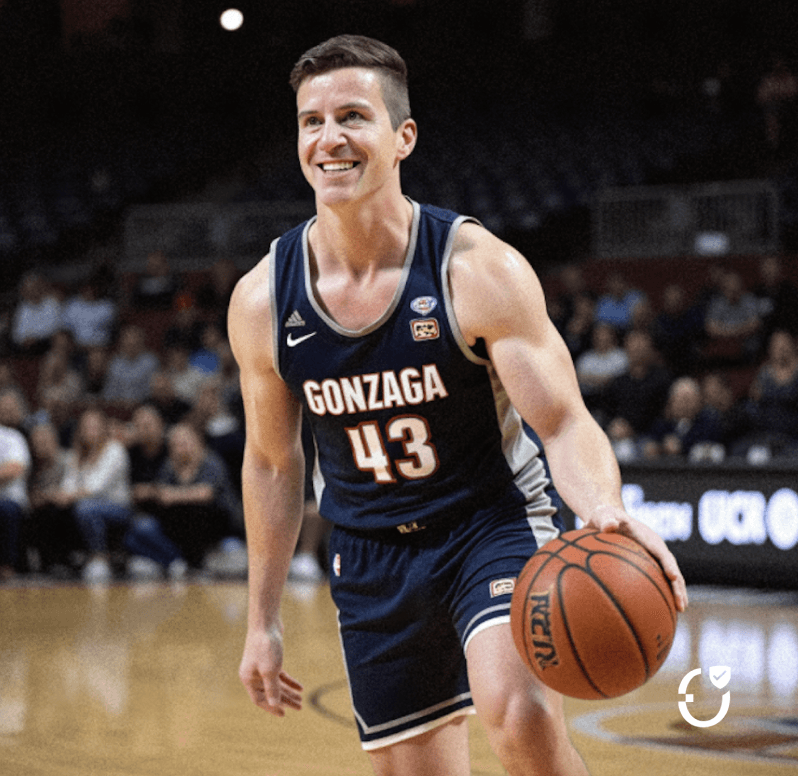
March Madness, and a bigger shift
It is that time of year: bracket season, buzzer-beaters, and watching Gonzaga lace up for another run. But this year I am seeing the tournament through a different lens, thinking about how college sports are evolving off the court as much as on it, in how athletes build their brands, protect their image, and shape their future.
Name, Image, and Likeness is being reshaped again, with schools starting to take the reins from donor-led collectives. At Official AI, we have been thinking a lot about what comes after NIL, and what it means to truly own your identity in the age of generative AI.
From NIL to AIL, artificial image and likeness
When NIL rules changed, athletes finally got what they deserved: the right to profit from their own name, image, and likeness. Just a few years later, we are in new territory. With a few clicks, anyone can create a realistic, high-quality image of someone else. That is powerful, and it is also dangerous.
As AI-generated content becomes more common, athletes and creators everywhere face a new question: who gets to control your image when it can be generated by someone else?
Consent is where it starts
At Official AI, we believe that just because you can generate someone's likeness does not mean you should, at least not without consent. So we built a platform that flips the script. Your identity stays yours. You get a verified identity and a record of what is authentically you, so the real is provable and misuse stands out.
Your image, your voice, your story, under your control.
Who owns the story
In a world where AI can recreate anyone, who owns the story matters. A realistic image of you can be made in seconds, and the difference between a deepfake and something authentic is consent and a record that proves it.
We can still be the ones holding the pen. Not by hoping a platform sides with us after the fact, but by owning the record of what is real, on our own terms.
Why universities need to step up
With NIL funding shifting from third-party collectives to university programs, the stakes are higher than ever. Schools are not just supporting athlete branding, they are becoming directly responsible for it. That means offering more than merch drops and highlight reels.
They will need secure, consent-based ways to help athletes protect their digital identity without compromising it. Universities have a chance to lead in protecting student-athletes' likeness. This is not just a tech tool. It is a trust tool.
Own your story before someone else does
We are entering a new era of visibility, one where your digital identity is as important as your real-world performance. Whether you are a student-athlete, a creator, or just someone who values agency over your own image, one thing is clear: consent is the foundation.
As a proud Zag and a builder who believes in the future of ethical AI, I hope we keep moving toward a world where identity is not just something you protect, it is something you own. Let's build it right.